Depreciation Calculator
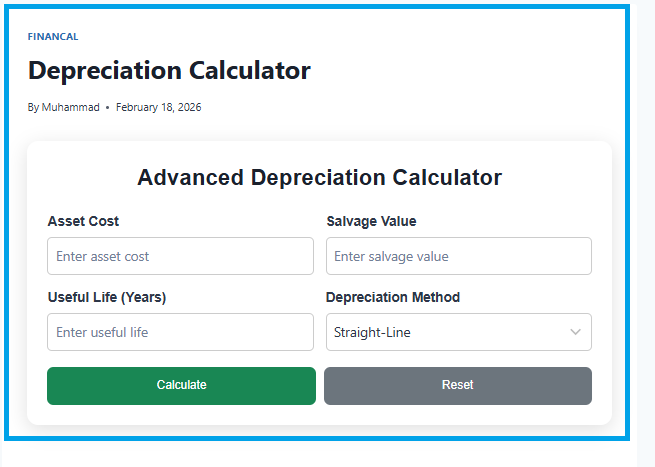
Advanced Depreciation Calculator
Depreciation Schedule
What Is a Depreciation Calculator?
Depreciation Calculator helps you estimate how much an asset loses value over time due to wear, age, or usage. Depreciation is widely used in accounting, tax planning, finance, and business forecasting.
This tool shows you the depreciation expense for any asset using the method of your choice.
How to Use the Depreciation Calculator
Using this tool is fast and simple:
Step 1 — Enter Purchase Price
The original cost you paid for the asset.
Step 2 — Enter Salvage Value
The estimated value of the asset at the end of its useful life.
Step 3 — Enter Useful Life
Number of years you expect to use the asset.
Step 4 — Select a Depreciation Method
Choose one of the most common methods:
- Straight Line
- Double Declining Balance
- Sum of the Years’ Digits
Step 5 Click Calculate
Instantly view your depreciation schedule and expense amounts.
No accounting degree needed — the calculator does the math for you!
Depreciation Methods Explained
Straight Line (SL)
This method spreads depreciation evenly over the asset’s useful life.
Formula:
Annual Depreciation = (Cost − Salvage Value) ÷ Useful Life
Double Declining Balance (DDB)
This is an accelerated method where depreciation is higher in early years.
Formula:
Rate = (2 ÷ Useful Life)
Depreciation = Rate × Book Value at Beginning of Year
Sum of Years’ Digits (SYD)
Another accelerated method based on the sum of year digits.
Formula:
SYD = n(n+1) ÷ 2
Depreciation Year = (Remaining Life ÷ SYD) × (Cost − Salvage Value)
Example Depreciation Calculation
Cost: $10,000
Salvage Value: $2,000
Useful Life: 5 years
Straight Line:
(10,000 − 2,000) ÷ 5 = $1,600 depreciation per yearBenefits of Using the Depreciation Calculator
Accurate financial tracking of asset value
Tax planning support for businesses
Helps prepare financial statements
Supports multiple depreciation methods
Saves time compared to manual calculation
Great for accountants, business owners, students
FAQs about Depreciation Calculator
What is depreciation?
Depreciation is the gradual reduction in the value of an asset over its useful life due to wear, use, or age.
Why is depreciation important?
Depreciation helps businesses and individuals allocate the cost of an asset over time, matching expense with revenue for accurate accounting.
Which depreciation method should I use?
- Straight Line is the simplest and most common.
- Double Declining Balance and Sum of Years’ Digits are used when assets lose value faster in earlier years.
Choice depends on your accounting and tax strategy.
Can I use this calculator for tax reporting?
Yes this tool provides depreciation figures that can be used as a reference for tax purposes (subject to your local tax laws).
Does the Depreciation Calculator handle salvage value?
Yes you can enter salvage value, and the calculator will adjust depreciation accordingly.
Who Uses a Depreciation Calculator?
This tool is useful for:
- Accountants
- Business owners
- Financial analysts
- Investors
- Students studying finance
Conclusion:
The Depreciation Calculator is a practical tool that takes the guesswork out of tracking asset value over time. Whether you are managing business finances, preparing tax return figures, or learning accounting basics, this tool gives you instant, accurate results with clear interpretations.